Article: The Lavender Menace: How Lesbians Reclaimed a Slur and Changed Feminist History
The Lavender Menace: How Lesbians Reclaimed a Slur and Changed Feminist History
The story of the Lavender Menace is one I keep coming back to. It's a moment where queer women refused to be pushed aside by the very movement that was supposed to fight for them - and that kind of defiance resonates deeply with me as a queer, trans masc, non-binary person making art about our histories.
In 1969, Betty Friedan - then president of the National Organization for Women (NOW) - warned that dykes in the feminist movement were a 'lavender menace' threatening to undermine the fight for women's rights. She feared their visibility would discredit feminism in the eyes of mainstream America. What happened next was one of the most iconic acts of protest in LGBTQ history.
What happened in 1970
On May 1, 1970, at the Second Congress to Unite Women in New York City, the lights went out. When they came back on, a group of around 20 women stood at the front of the room wearing hand-dyed lavender t-shirts printed with the words 'LAVENDER MENACE.' They had taken the slur and turned it into a badge of pride.
Among the group were activists Rita Mae Brown, Karla Jay, and other members of the Radicalesbians - women who were tired of being sidelined by the very movement that claimed to fight for their liberation. They handed out copies of their essay 'The Woman-Identified Woman,' which argued that dyke identity was not a threat to feminism but central to it.
From slur to symbol
The protest worked. By 1971, NOW passed a resolution acknowledging dyke rights as a legitimate feminist concern, and the broader women's movement began to embrace the intersections of gender and sexuality that we still fight for today.
The lavender menace became a symbol of defiance - a reminder that queer women would not be erased from their own movement. The colour lavender - already associated with queer identity - became even more deeply intertwined with dyke feminism, a legacy that endures in queer culture and Pride celebrations around the world.
Dyke culture today - and why it matters to me
More than fifty years later, the fight for LGBTQ visibility within feminist spaces continues. But one of the things I love about modern dyke culture is how it has expanded far beyond its origins. Today, dyke spaces embrace trans women, trans masc people, non-binary folks, and queer people of all kinds. As a trans masc person, I feel a deep connection to dyke culture and its history of resistance - it's never been just about one identity, it's about refusing to fit into the boxes other people make for you.
That spirit of the Lavender Menace - of showing up, refusing to be silent, and reclaiming the language used against you - is as relevant now as it was in 1970. And it's a spirit that belongs to all of us who exist outside the mainstream.
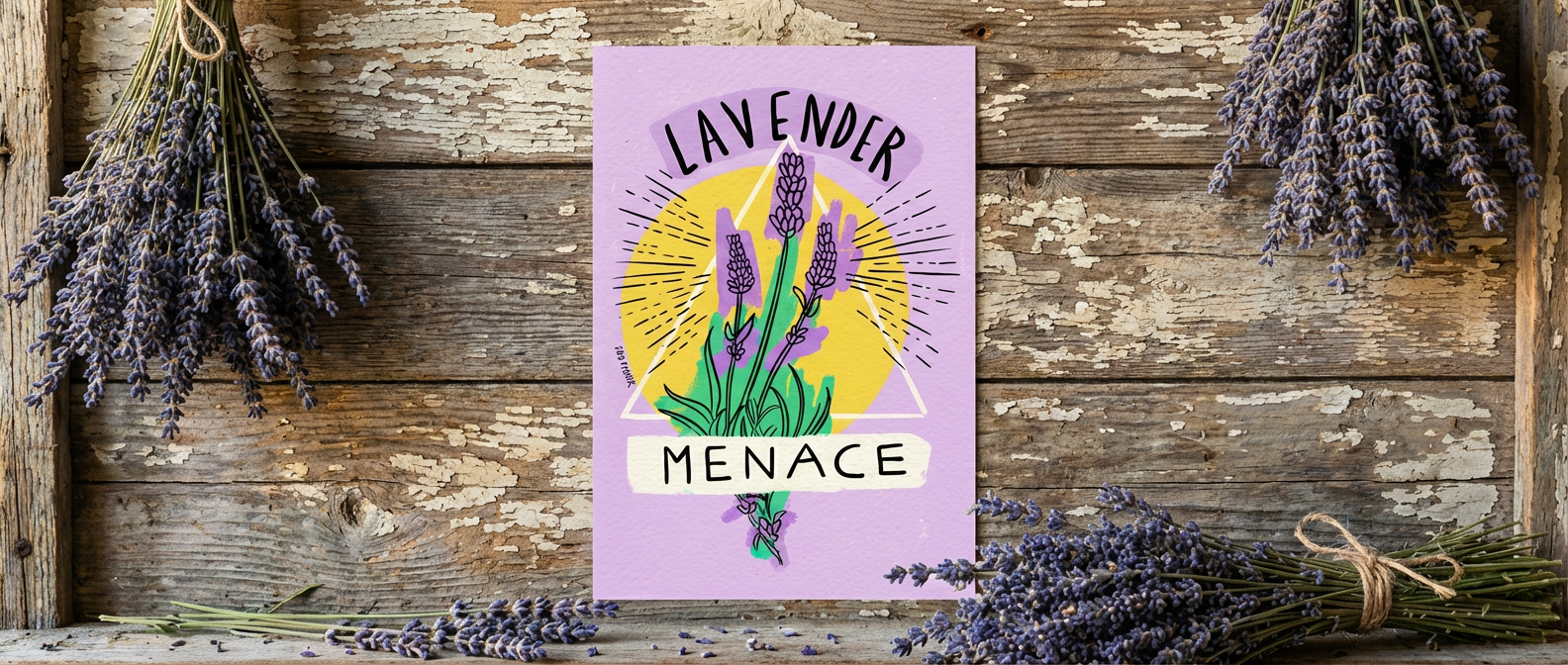
That's why I created the Lavender Menace Art Print. I wanted to capture that fierce, unapologetic energy in bold colour and hand-drawn illustration - a piece of queer feminist history you can put on your wall and be reminded of every day.
Further reading
If you want to dive deeper into this history, check out Karla Jay's memoir Tales of the Lavender Menace, or explore the Radicalesbians' original essay 'The Woman-Identified Woman,' which remains a foundational text in queer feminist theory.

Written by Fox Fisher